- Sanskrit
- Dhanurasana
- In Russian
- Дханурасана (лук)
- In English
- Dhanurasana (Bow)
Holding the legs is optional
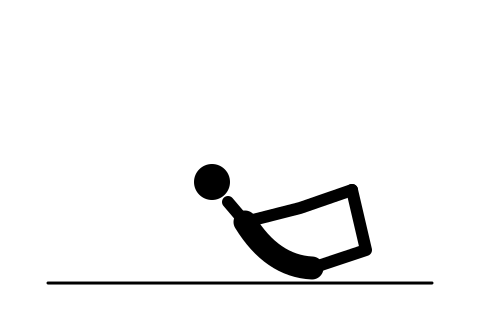
Dhanurasana is often pictured with the knees lifted high, but the diagram on this page shows a small lift. Depth depends on the mobility of the shoulders, hips and upper back and does not evaluate a person. If holding the ankles brings compression in the lower back, a strap and a lower lift suit better.
The belly rests on the floor; pressure on it should not get in the way of breathing. If breathing becomes hard, release the hands. Rehearse the entry and exit with a teacher before the first attempt and agree on a sign that means stop.
How to do it
- Lie on the belly on a non-slip mat. If pressure on the hips or ribs is uncomfortable, place a folded blanket under the pelvis. Rest the arms along the body and the forehead on the floor.
- Bend the knees and loop a strap around the ankles. If you can reach the feet with your hands, hold the ankles without effort.
- On an inhalation, lift the chest slightly, keeping the neck long. Do not lift the thighs off the floor and do not try to raise the knees high.
- Breathe calmly and briefly: two or three cycles. If the breath becomes disrupted, release the hands at once and lower the torso.
- Exhale and carefully lower the chest and legs. Turn the head to one side and rest on the belly before moving to another pose.
Common mistakes
- Pulling the legs with all your strength and lifting the knees and chest as high as possible. Height does not show quality: a small lift with even breathing is enough.
- Throwing the head back to look forward. The neck stays a continuation of the spine, and the gaze goes down in front of you.
How to make it easier
- Practise the chest lift with the arms along the body, without lifting the legs. It is an equally useful way to feel the work of the back.
- Lift one leg at a time, holding it with a strap, and leave the other on the floor. Or replace the pose with a half cobra on the forearms.
When to skip it and ask a doctor first
- Do not practise the pose with pain in the lower back, neck or shoulders, a spinal condition, or after a recent injury or abdominal operation. Ask a doctor first which backbends suit you.
- During pregnancy, with high blood pressure, a hernia, dizziness or numb arms, do not learn the pose from general instructions. Agree on practice with a doctor; sharp pain means stopping at once.
Place in a class
In hatha the pose fits after Cobra as the next small step, with preparation first. In vinyasa a gentler option can replace it. Drishti is a calm gaze downwards. After a backbend, rest lying down and, if needed, talk through the load on the back. There is no need to repeat the pose many times in a row: one attentive attempt is enough.
Aura Editorial · updated November 23, 2026