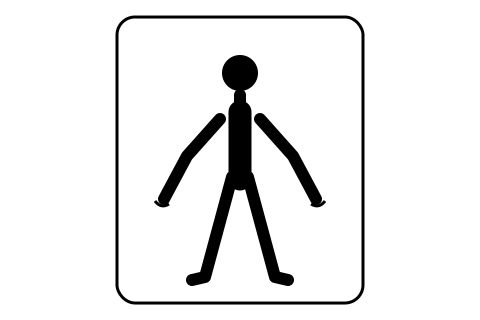
- Sanskrit
- Savasana
- In Russian
- Поза трупа (шавасана)
- In English
- Corpse pose
Comfort can change
The diagram shows one common arrangement. Arm position, foot spacing and head support do not need to match the picture. Notice whether clothing presses into the neck, a roll slips or the room feels cold. Adjustments remain available after the group pause begins.
Eyes can remain open. If silence or closed eyes feels uncomfortable, choose a quiet point to look at or tell your teacher that you prefer sitting. A pause is not a test of whether you can relax on command, and moving does not mean you have failed.
How to do it
- Prepare a non-slip mat with enough room for arms and legs. Place a blanket and any supports within reach before lying down, so you do not have to reach from an awkward position.
- Lower yourself comfortably, moving through side lying if helpful. Rest on the back if suitable, separate the legs by a comfortable amount and allow the feet to settle in their own position.
- Place arms slightly away from the torso with palms upwards or another comfortable arrangement. Try a roll under the knees if needed; avoid support that forces the head to tip backwards.
- Leave breathing ordinary and choose open or closed eyes. Begin with a short pause and notice contact with the surface. Do not force stillness when you want to adjust the position.
- To leave, move fingers and toes, bend the legs if comfortable and turn onto one side. Pause, then use the arms to come into sitting and check how you feel before standing.
Common mistakes
- Tolerating cold, lower back pressure or numbness because Savasana is supposed to be motionless. Adjust blankets and supports, change position or finish before the shared instruction to move.
- Trying to breathe as deeply as possible, stop all thoughts or judge rest by whether you fall asleep. Return to ordinary breathing and the simple contact of the surface beneath the body.
How to make it easier
- Bend the knees with feet resting on the floor or place lower legs on a suitable stable support. Choose with your teacher and check that no edge presses into the legs.
- If lying on the back is uncomfortable, turn onto a side with support between the knees or rest seated on a chair. You do not need to endure the original shape first.
When to skip it and ask a doctor first
- Change position if you experience pain, difficulty breathing, dizziness or increasing numbness. Seek medical help if symptoms persist; resting should not intensify discomfort or require tolerating it until class ends.
- During pregnancy, after surgery or with restrictions on lying positions, ask a doctor about an appropriate alternative first. Share advice with your teacher instead of testing an uncomfortable position independently.
Ending a class
In hatha and vinyasa, Savasana can mark the end of active movement. Asana names the posture and drishti describes the gaze; here the gaze may stay soft without a special focus. Find a hatha teacher with whom you can agree on an alternative and a calm exit, especially when getting down to the floor or standing up is difficult.
Aura Editorial · updated November 12, 2026