- Sanskrit
- Salabhasana
- In Russian
- Шалабхасана (саранча)
- In English
- Salabhasana (Locust)
A small lift is enough
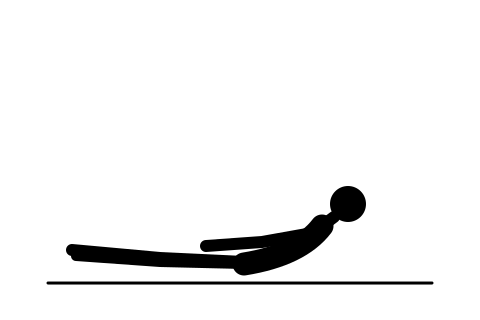
Salabhasana is often pictured with the legs lifted high, but the diagram on this page shows a small lift. Depth depends on the mobility of the hips and upper back and does not evaluate a person. If lifting the legs brings compression in the lower back, leave the legs on the floor and lift only the chest.
The belly rests on the floor; pressure on it should not get in the way of breathing. If breathing becomes hard, come down. Rehearse the entry and exit with a teacher before the first attempt and agree on a sign that means stop.
How to do it
- Lie on the belly on a non-slip mat. If pressure on the hips is uncomfortable, place a folded blanket under the pelvis. Stretch the arms along the body with palms up and rest the forehead on the floor.
- Set the legs hip-width apart and extend them back. Gently engage the buttocks and back without tensing the face and neck.
- On an inhalation, lift the chest slightly, keeping the neck long. Look down in front of you; the arms stay by the hips.
- If the breath stays even, lift the legs a small height. Stay for two or three cycles and do not lift higher than a calm lower back allows.
- Exhale and lower the chest and legs. Turn the head to one side and rest on the belly before moving to another pose.
Common mistakes
- Lifting the chest and legs as high as possible. Height does not show quality: a small lift with even breathing is enough.
- Throwing the head back to look forward. The neck stays a continuation of the spine and the gaze goes down.
How to make it easier
- Practise the chest lift with the arms along the body, without lifting the legs. It is an equally useful way to feel the work of the back.
- Lift one leg at a time and leave the other on the floor. Or replace the pose with a half cobra on the forearms.
When to skip it and ask a doctor first
- Do not practise the pose with pain in the lower back or neck, or after a recent injury or abdominal operation. Ask a doctor first which backbends suit you.
- During pregnancy, with high blood pressure, a hernia, dizziness or numb arms, do not learn the pose from general instructions. Agree on practice with a doctor; sharp pain means stopping at once.
Place in a class
In hatha the pose fits after Cobra as the next small step: the torso position is the same and the legs do light work. Later in a class, Bridge or Camel can follow. In vinyasa a gentler option can replace it. Drishti is a calm gaze downwards. One attentive attempt is enough: after a backbend, rest lying down and talk through the load on the back.
Aura Editorial · updated November 23, 2026