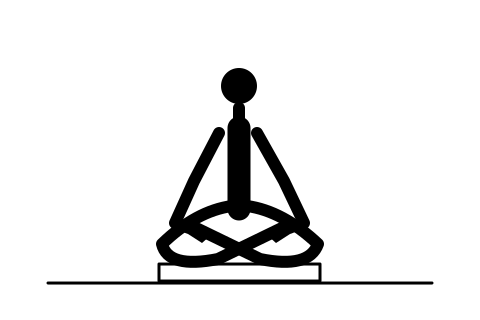
- Sanskrit
- Padmasana
- In Russian
- Лотос
- In English
- Lotus pose
A foot on the thigh is not the goal
Available hip movement matters more than willingness to tolerate knee pressure. The diagram identifies the shape and arrangement of body parts. It cannot establish whether that position suits an individual. Even a familiar seat needs an unhurried way out without anyone pulling the legs free.
Sitting remains useful without full Lotus. Crossed legs or a chair allow you to choose pelvic height and a comfortable place for the hands. If you want to change position after a few breaths, do so before numbness develops.
How to do it
- Before class, tell your teacher about movement restrictions and previous injuries. Prepare a stable seat and agree on an alternative: simply crossed shins or sitting on a chair without pressure on the legs.
- Sit on firm, even support with legs forwards. Check whether each leg can bend and straighten comfortably without using the hands to hold the torso up; remain with an alternative if uncomfortable.
- Ask the teacher to assess available hip movement. Avoid placing a foot on a thigh by twisting the knee, pulling the ankle or pressing a palm against the knee.
- Only explore the full shape if an in-person teacher has assessed its suitability and is supervising. Stop for resistance, pain or any need to force movement, releasing both feet and returning to the agreed simple sitting position with both feet on the floor.
- Agree on the exit beforehand too: release the legs one at a time without jerking, supporting them if needed. Straighten within a comfortable range and check how you feel before any further attempt.
Common mistakes
- Treating knee pain as an ordinary stretch and waiting for it to disappear during a hold. Stop the attempt immediately; the knee should not become the site of forced rotation.
- Pressing raised knees down or pulling feet higher to achieve symmetry. Appearance cannot show available movement. Do not ask someone else to push the legs towards the floor.
How to make it easier
- Choose simply crossed shins with both feet on the floor and raise the pelvis on a folded blanket. This is a separate seat, not a compulsory stage leading to full Lotus.
- Sit on a stable chair with supported feet. Gaze and breathing do not require crossed legs. Half Lotus also involves demanding leg positioning and is not automatically a safe replacement.
When to skip it and ask a doctor first
- Avoid Lotus with pain, numbness, a recent injury or an operation involving the legs or pelvis. Ask a doctor about suitable movement before discussing restrictions with your teacher.
- If a doctor has restricted deep bending, rotation or joint loading, do not test those limits through the full shape. Avoid another attempt until you have sought advice about discomfort after leaving.
Choosing a teacher
Hatha allows time for an individual sitting arrangement; full Lotus can be omitted in vinyasa. Asana names the posture and drishti describes the gaze. Look for a hatha teacher willing to work with a simple alternative instead of promising that everyone will achieve Lotus within a fixed period.
Aura Editorial · updated November 12, 2026