- Sanskrit
- Gomukhasana
- In Russian
- Гомукхасана (коровья морда)
- In English
- Gomukhasana (Cow Face)
The arms matter more than the knees
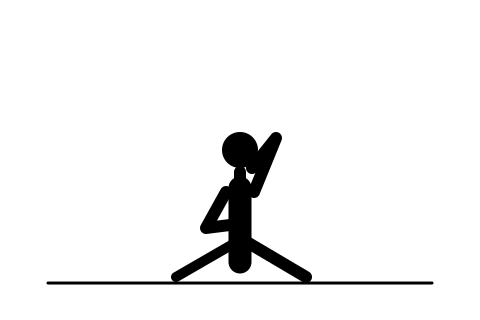
The diagram shows the shape with stacked knees and hands joined behind the back. Real shoulder mobility differs widely between people. One person needs a strap the length of a towel, another a strap twice as long. This is an ordinary difference in joint structure and says nothing about the quality of practice.
If the stacked knees are uncomfortable, begin with the arms. The shoulder movement can be explored separately: try lifting the elbow without drawing the shoulder to the ear, and notice the breath. A short hold with a straight back is better than a long one with strain.
How to do it
- Sit on a folded blanket. Bend the knees and place one knee over the other; the feet stay beside the pelvis. If this is tight, sit in easy pose instead.
- Even out your weight between the sitting bones. If one side of the pelvis lifts, place a rolled towel under it so the torso stays level.
- Hold a strap in the right hand and raise that arm towards the ceiling. Bend the elbow and lower the hand with the strap behind the head, without pressing the chin into the chest.
- Take the left arm behind the back from below and find the strap with the fingers. If the hand does not reach, lengthen the strap; the distance between the palms does not matter.
- Breathe calmly and widen the chest forwards. Then release the arms, unfold the knees, change their order and repeat on the other side.
Common mistakes
- Pulling the hands towards each other while leaning forward and rounding the back. Lengthen the strap or keep one hand on the knee: a straight spine matters more than joining the hands.
- Tipping the head back against the raised arm. The neck stays long, and the elbow points up without hard pressure on the back of the head.
How to make it easier
- Practise only the arm position with the strap, sitting in easy pose or on the heels. The knees do not have to be stacked if that is uncomfortable.
- Wrap your arms around yourself in front of the chest with elbows crossed. This shows the direction of the shoulder movement without taking the arms behind the back.
When to skip it and ask a doctor first
- With pain in the shoulders, neck, knees or hips, do not practise the pose. After a shoulder injury or an operation, ask a doctor first which arm movements are suitable.
- With numbness in the arms or legs, and during pregnancy, choose a version without stacked knees together with a teacher. A sharp sensation is a reason to leave the pose at once.
Where it appears
In hatha, Gomukhasana is used to prepare the shoulders and hips for seated positions. In vinyasa it usually appears after a dynamic block as a calm pause. The pose goes well with Bound Angle. Drishti here means a calm gaze ahead without straining the eyes. Afterwards, extend the legs, rest and compare the two sides without judging them.
Aura Editorial · updated November 15, 2026