- Sanskrit
- Virasana
- In Russian
- Вирасана (поза героя)
- In English
- Virasana (Hero pose)
Seat height matters more than depth
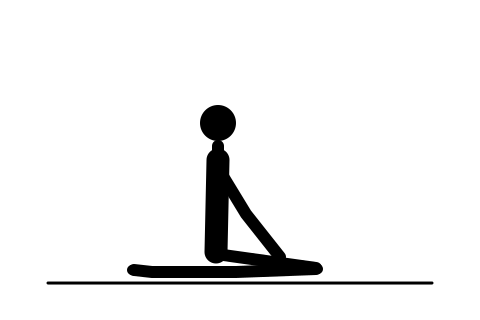
Virasana is often pictured with the seat directly on the floor, but the diagram on this page stresses working with a support. If the pelvis does not sink, raise the block; the pose is no worse for it. Judge sensations, not depth: pressure in a joint is a reason to change the position, not to endure it.
Leaving the pose matters as much as entering it: extend the legs carefully, without a jerk. Agree in advance with a teacher how to change the support and what counts as a sign to stop. If you feel numbness in the feet, leave at once.
How to do it
- Kneel on the mat with the knees hip-width apart and the feet behind. Place a blanket under the knees and ankles if the floor is hard.
- Set a block or a folded blanket between the feet at a comfortable seat height. The soles face up and the toes point back.
- Slowly lower the pelvis onto the support between the feet. If the knees pull, raise the height; if the ankles press, place a bolster under them.
- Rest the palms on the thighs, lengthen the spine and look forward. Breathe calmly for two or three cycles; with discomfort in the knees, leave at once.
- Supported by the hands, lift the pelvis, extend the legs forward and shake them out. Rest sitting with the legs stretched out.
Common mistakes
- Sinking to the floor without a support and enduring pressure in the knees. Raise the block: the seat should be at a height at which the knees do not pull.
- Leaning back and compressing the lower back. The torso stays long and the palms rest on the thighs.
How to make it easier
- Sit on a high block between the feet or on the heels in [Thunderbolt](/asanas/thunderbolt). This is an equally complete version.
- Place a bolster under the ankles and under the knees. Or sit on a chair with the feet on the floor and the palms on the thighs.
When to skip it and ask a doctor first
- Do not practise the pose with pain in the knee or ankle, or after an injury or joint operation. Ask a doctor first which positions suit you.
- During pregnancy, with swollen legs or numb feet, do not learn the pose from general instructions. Agree on practice with a doctor; sharp pain means leaving the pose at once.
Place in a class
The pose is often chosen for a calm seat before breathing or meditation. In hatha it follows Thunderbolt: the shins are in the same place, but the pelvis sinks between the feet. Other seated options are Easy pose and Bound angle. Drishti is a calm gaze forward. Begin with a short time and extend it gradually if the knees stay quiet.
Aura Editorial · updated November 23, 2026