- Sanskrit
- Ardha Matsyendrasana
- In Russian
- Ардха матсиендрасана (скрутка сидя)
- In English
- Ardha Matsyendrasana (Seated twist)
The turn comes from the ribcage
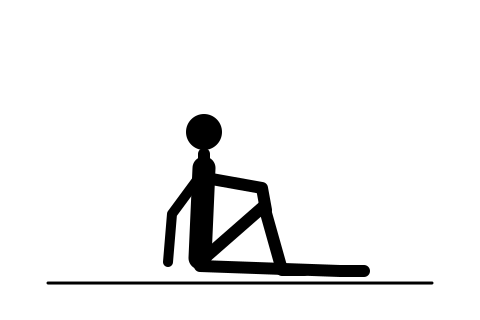
Ardha Matsyendrasana is often pictured with a deep turn and a hand reaching the foot, but the diagram on this page shows a gentle twist. The range depends on the mobility of the upper back and hips and does not evaluate a person. If the lower back compresses, leave the leg extended and turn the torso less.
The breath leads the movement: on an inhalation the spine lengthens, on an exhalation the torso turns a little further. If breathing becomes hard, return to the centre. Agree a stop sign with a teacher in advance and ask them to look at the pelvis and shoulders from behind.
How to do it
- Sit on a folded blanket with the legs stretched forward. Bend the right knee and place the foot on the floor outside the left thigh; leave the left leg extended.
- On an inhalation lengthen the spine. Hold the right knee with the left arm or rest the palm on the thigh; place the right palm on the floor behind the pelvis.
- On an exhalation turn the ribcage to the right with a small movement. The pelvis stays steady, with both sitting bones pressing on the support.
- Look forward, or over the right shoulder if the neck is calm. Breathe evenly for two or three cycles without deepening the turn with the arm.
- On an exhalation slowly return to the centre, stretch the legs forward and breathe. Repeat on the other side.
Common mistakes
- Twisting with a jerk and pulling yourself round with the arm on the knee. The turn comes from the ribcage; the arm only supports.
- Rounding the back and lifting the shoulder towards the ear. Sit higher and reduce the turn: a long back matters more than depth.
How to make it easier
- Keep both legs bent in easy pose and rest the palms on the knees. Turn the torso a small angle.
- The twist can be done on a chair: feet on the floor, one hand on the back of the chair and the other on the knee. The turn stays small.
When to skip it and ask a doctor first
- Do not practise the twist with pain in the lower back, neck or spine, or after an injury or abdominal operation. Ask a doctor first which turns suit you.
- During pregnancy, with dizziness or numb arms, do not learn the pose from general instructions. Agree on practice with a doctor; sharp pain means leaving the pose at once.
Place in a class
In hatha the twist is placed near the end of a class, after Seated forward bend, when the back is warm. Easy pose and Bound angle prepare it: they teach sitting evenly. In vinyasa it is chosen as a neutral pause. Drishti is a calm gaze forward or over the shoulder. After the twist, rest sitting and compare the sides without judging.
Aura Editorial · updated November 23, 2026