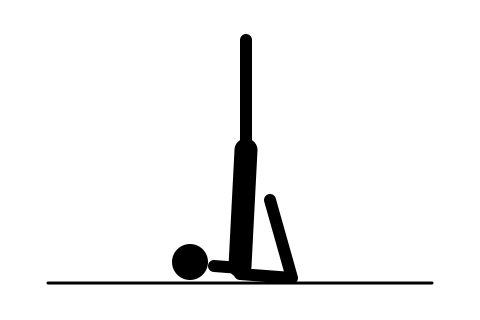
- Sanskrit
- Sarvangasana
- In Russian
- Сарвангасана (стойка на плечах)
- In English
- Shoulder stand (Sarvangasana)
A diagram cannot assess readiness
The illustration helps identify the pose and the arrangement of body parts. It cannot show loading of the neck and shoulders or establish an appropriate entry for an individual. A picture cannot assess neck health, breathing or a controlled exit.
Leaving out Sarvangasana does not require another difficult replacement. You can remain lying or sitting while the group explores inversions. Tell the teacher your chosen alternative in advance so you do not need to decide under pressure from the group pace.
How to do it
- Before practice, ask a doctor whether inversion and neck loading are appropriate if health restrictions apply. Share that advice with your teacher; permission for ordinary exercise does not establish readiness for Sarvangasana.
- In person, discuss experience, arm support and an exit plan. Ask the teacher to offer an option without raising the pelvis above the shoulders that you can choose instead of the full shape.
- Prepare a non-slip surface and clear space, and agree on spotting. Do not treat a blanket under the shoulders or a wall as protection: they cannot control neck loading or replace the attention of a teacher.
- Explore preparation only in the agreed in-person setting. Do not lift the legs upwards, push off the floor or test readiness from this page; remain with an alternative if uncertain.
- Finish preparation according to the agreed plan and rest on your back with the knees bent. Even if the full pose was learnt in person, review entry and exit with your teacher rather than extending duration through discomfort.
Common mistakes
- Throwing the legs upwards, turning the head in the position or taking weight on the neck instead of the shoulders. These actions do not allow calm control of loading and are not a test of readiness.
- Tolerating pressure in the neck or throat, difficult breathing or trembling to wait for a group count to end. Discomfort means stop rather than trying to hold for longer.
How to make it easier
- Omit the pose entirely and choose a position lying on the back, without raising the pelvis above the shoulders, with your teacher. For rest you can stay in Savasana with the knees bent.
- Discuss separate shoulder and back preparation without inversion. Another inverted pose is not automatically a safe substitute; do not replace Shoulder stand with Plow or Headstand independently.
When to skip it and ask a doctor first
- Avoid Shoulder stand with head, neck or shoulder pain, dizziness, numbness, difficulty breathing, recent injury or surgery. Ask a doctor about suitable loading first and explain any restrictions to the teacher.
- During pregnancy, during menstruation, with restrictions on inversions or other prescribed activity limits, do not attempt the full form without individual medical advice. Beginners and anyone without in-person teaching should omit it.
- With high blood pressure, glaucoma or another eye condition, a hernia, or neck or spine problems, do not try positions with the pelvis or legs raised without medical advice. If in doubt, see a doctor first.
An individual choice
Hatha can discuss support and limits separately, while vinyasa allows omitting the whole transition. Asana names the position and drishti describes the gaze. Find a hatha teacher for an in-person discussion of preparation, keeping medical advice and the option to decline the full pose without a deadline for achievement.
Aura Editorial · updated November 13, 2026