- Sanskrit
- Vasisthasana
- In Russian
- Боковая планка (васиштхасана)
- In English
- Side plank (Vasisthasana)
Stability matters more than height
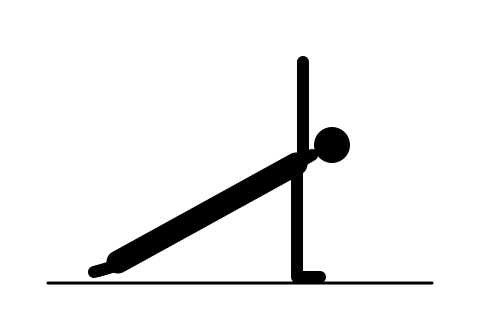
In the diagram the body forms a straight line, but that is a guide, not a requirement. If the wrist tires, move to the forearm; if the shoulder trembles, put the knee on the floor. A supported version does not make the pose smaller: it helps you first understand how the supporting arm carries weight, and only then make it harder.
The pelvis lifts from the side of the torso, not from a jerk. Look at a steady point so the neck stays a continuation of the spine. Ask a teacher to look from the front: does the shoulder drift forward, does the pelvis sag? If you tire, come down sooner: the quality of the support matters more than time.
How to do it
- Start from a regular plank or from hands and knees. Place the palm under the shoulder with the fingers pointing forward. Keep the supporting shoulder over the wrist, not up by the ear.
- Turn the torso sideways and shift the weight onto the right hand and the outer edge of the right foot. Stack the left foot on top, or place it in front of the right for stability.
- Lift the pelvis so the body forms one sloping line from the heels to the crown. If the pelvis sinks, bend the lower knee and leave it on the floor.
- Raise the left arm up or rest it on the hip. Look forward or at the floor without twisting the neck, and take two or three even breaths.
- Lower the pelvis, return to plank or hands and knees, and rest in child's pose. Then repeat on the other side.
Common mistakes
- Letting the pelvis sink and pulling the supporting shoulder towards the ear. Bend the lower knee: the support should stay steady and the breath free.
- Locking the elbow straight. Leave a little softness in it and keep the arm directly under the shoulder.
How to make it easier
- Practise with the lower knee on the floor: the other leg stays straight or bent in front. Leave the upper hand on the hip.
- Support yourself on the forearm instead of the palm and set the feet against a wall so they do not slide. Hold for as long as breathing stays comfortable.
When to skip it and ask a doctor first
- With pain in the wrist, elbow, shoulder or lower back, do not hold the arm support. After an injury or an operation, ask a doctor first what load is suitable.
- During pregnancy and with dizziness, practise only together with a teacher or replace the pose with a knee support. Sharp pain is a reason to leave the pose at once.
Where it appears
In hatha, side plank is usually taught after Plank: the hands are the same and only the direction of the torso changes. In vinyasa it sits between Four-limbed staff and Downward-facing dog as a short change of support. Drishti here is a calm gaze that helps keep balance. Begin with one attempt on each side and add a second when the first passes without strain in the wrist.
Aura Editorial · updated November 15, 2026