- Sanskrit
- Uttanasana
- In Russian
- Наклон стоя
- In English
- Standing forward bend
Support height matters
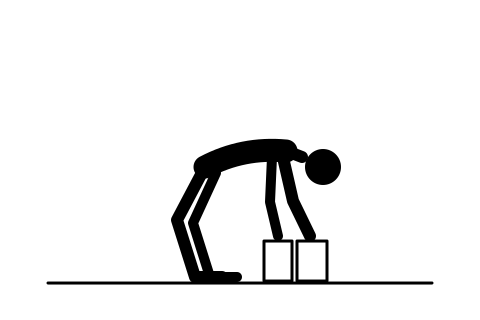
The illustration shows blocks rather than a compulsory depth. A stable raised surface should meet your hands where you can stop. Avoid blocks on a soft cushion and chairs that swivel or roll. Arrange the area before moving so you do not need to search for support halfway down.
Bend the knees as much as needed for a quiet position. There is no requirement to press the abdomen onto the thighs or achieve a particular line at any cost. When you rise, pause to notice how standing feels before beginning another pose.
How to do it
- Stand with parallel feet at a comfortable width. Prepare two stable blocks or a chair in front; check that the support cannot slide and is within easy reach.
- Soften the knees and place hands on hips. Start the fold at the hip joints, moving the pelvis back while keeping control of the torso rather than dropping down suddenly.
- Place palms on your chosen support. Adjust its height so breathing remains easy; bend the knees further if needed and stop well above the floor without reaching beyond support.
- Let the head follow the spine without tipping it back or pulling the face towards the legs. Keep pressure through both whole feet and avoid bouncing to deepen the fold.
- After two ordinary breaths, bend the knees and return slowly to upright standing with hand support. Adjust support height or use a stable chair as you rise; if support will become unreachable, arrange teacher assistance beforehand. Pause once upright.
Common mistakes
- Straightening the knees fully while reaching for the floor and holding the breath. Bend the legs and raise the support; floor contact does not define the quality of the pose.
- Putting nearly all weight into the toes or pulling the torso towards the shins with the hands. Spread the base again and remove the pulling action before changing depth.
How to make it easier
- Keep a shallow fold with palms on the back of a stable chair. Place the chair against a wall so it cannot move while you choose a comfortable distance.
- Bend the knees further while keeping the whole feet grounded. Explore one short entry and exit with a teacher instead of a long hold, resting upright between attempts.
When to skip it and ask a doctor first
- Avoid the fold with back or leg pain, numbness or dizziness. For recurring symptoms, ask a doctor about suitable movement and whether lowering the head below the pelvis is appropriate.
- Following injury, surgery or prescribed limits on bending and weight bearing, discuss practice with a doctor first. Avoid testing your limit by increasing hand pressure on the torso.
Practising with a teacher
Hatha allows time to select supports, while vinyasa requires agreeing on an unhurried transition in advance. Asana names the posture and drishti helps direct the gaze without neck effort. A hatha teacher can explore a short fold beside a wall or chair, taking account of available movement and any advice from your doctor.
Aura Editorial · updated November 12, 2026