- Sanskrit
- Matsyasana
- In Russian
- Матсьясана (рыба)
- In English
- Matsyasana (Fish)
The neck matters more than chest height
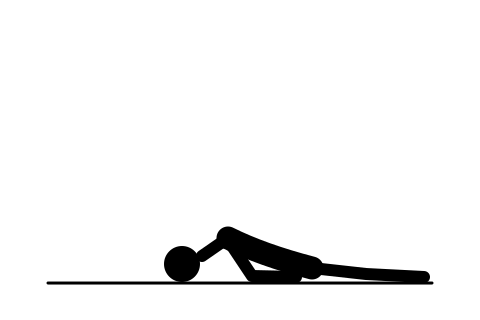
Photographs often show Fish with the chest very high and the crown of the head on the floor. That shape changes the load on the neck and should be learned in person. The diagram on this page shows a gentle version: the head rests on the mat, a small support lifts the chest, and there is no weight on the crown of the head.
Ask a teacher to look from the side: does the neck stay long, and do the shoulders press towards the ears? If tension in the throat, dizziness or a feeling of compression in the neck appears, lower the torso; if this keeps happening, discuss the pose with a doctor. Rehearse the entry and exit before the first attempt.
How to do it
- Lie on your back on the mat with the legs extended. Place a rolled blanket or a small bolster across the mat under the shoulder blades so the chest lifts without effort.
- Rest the forearms on the floor along the body, palms down. Soften the shoulders and move them away from the ears.
- Leave the head on the floor in a position where the neck stays long and free. In this version there is no weight on the crown of the head.
- Breathe calmly for five or six cycles and let the ribcage open. If the neck tightens, place a folded towel under the head.
- Leave the pose by lifting the head with the chin towards the chest and lowering the torso. Lie on your back with the knees bent and rest.
Common mistakes
- Pressing hard on the crown of the head and lifting the chest high. The load shifts to the neck; leave the head on the floor without pressure.
- Holding the breath in the backbend. If the breath is disrupted, lower the chest onto a lower bolster or remove the support.
How to make it easier
- Lie on your back with a bolster under the shoulder blades and the arms along the body. No head movement is needed.
- If lying down is uncomfortable, replace the pose with a chair version: palms on the backrest, the chest opens gently forwards without tilting the head back.
When to skip it and ask a doctor first
- Do not practise the pose with pain in the neck, shoulders or lower back, or after an injury or operation. Ask a doctor first whether positions that bend the neck are suitable.
- During pregnancy, with dizziness, high blood pressure or numb arms, do not learn the pose from general instructions. Agree on practice with a doctor; a sharp sensation means stopping at once.
Place in a class
In hatha, Fish is often placed after Plow or Shoulderstand as a counter pose, but only after in-person guidance. In other cases it can follow Bridge. Drishti is a calm gaze at the ceiling without straining the eyes. Rest between attempts: repeating the pose is optional.
Aura Editorial · updated November 23, 2026